
What Are the Essential Features to Look for in Professional Craft Beer Equipment?
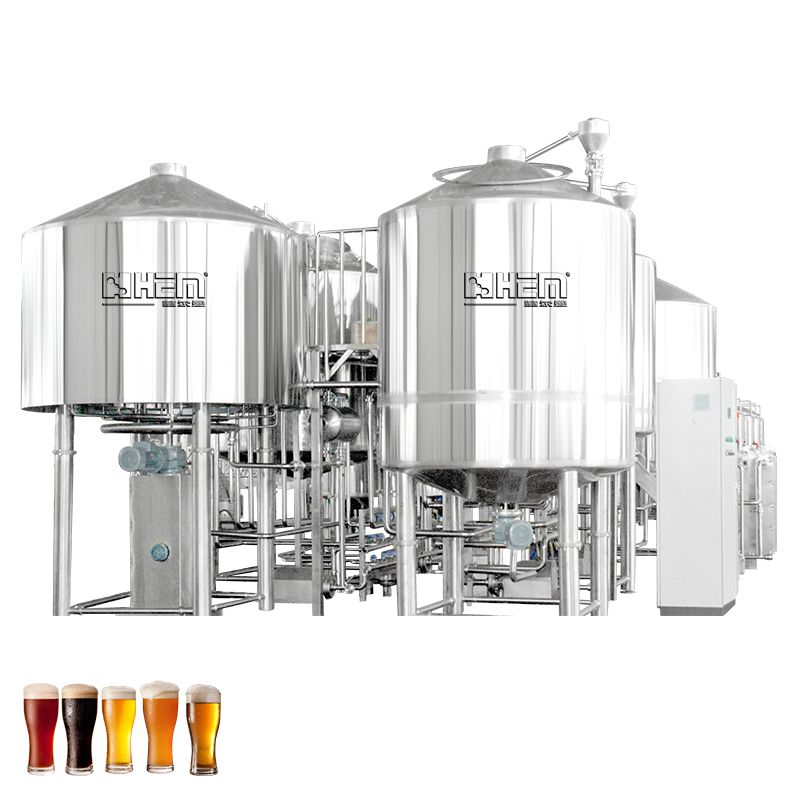
Professional craft beer equipment demands 316L stainless steel construction with Ra < 0.4 µm interior surface finish to prevent microbial colonization. Systems must integrate VFD-controlled motors to maintain shear stress levels below 1.5 Pa during hop addition. Thermal transfer efficiency must exceed 90% in steam jackets, while PLC-integrated oxygen sensors monitor dissolved oxygen levels below 50 ppb to ensure shelf-life stability. Optimized brewhouse design reduces overall water-to-grist ratios to 3:1, improving extract recovery by 12% compared to standard configurations.
Brewhouse vessels utilize 304 stainless steel with a minimum wall thickness of 3mm to endure thermal fatigue during repeated 100°C boil cycles. Manifold design incorporates butterfly valves with EPDM seats rated for 150°C, ensuring a hermetic seal against pressurized wort transfer.
High-efficiency heat exchangers reduce wort cooling times by 40%, preventing dimethyl sulfide (DMS) formation.
Steam jacket coverage over 75% of the vessel surface area promotes rapid temperature ramps, consuming 20% less energy per hectoliter than under-jacketed designs.
Fermentation cellar hardware requires pressure-rated tanks capable of withstanding 2.5 bar, facilitating natural carbonation via spunding valves.
| Feature | Specification | Impact |
| Cooling Jacket | Multi-zone glycol | ±0.2°C thermal precision |
| Tank Finish | Passivated 316L | Reduced biofilm risk |
| Sight Glass | Borosilicate | Visual clarity/safety |
Automated cooling cycles utilize PID controllers to maintain set points within 0.1°C of target yeast-specific temperatures, reducing attenuation variance by 18% across 50-batch trials.
CIP skids manage 2% caustic concentration at 70°C for effective protein removal, utilizing flow rates of 1.5 meters per second inside piping circuits.
Independent spray ball testing demonstrates 99.9% coverage of vessel headspaces during 15-minute cycles.
Conductivity meters measure chemical concentration in real-time, reducing water consumption by 25% compared to manual dilution methods, extending the operational life of sensors and seals.
| Component | Material | Performance Standard |
| Gaskets | EPDM/PTFE | Sanitary grade (FDA) |
| Pumps | Sanitary Centrifugal | 3,000 liters per hour |
| Piping | Sanitary Tubing | Welded/Tri-clamp |
Integration of flow meters on the output line allows brewers to track wort volume with 98% accuracy, minimizing beer losses during transfer.
Digital data logging records pressure and temperature variations at 10-second intervals for batch traceability.
PLC interfaces allow for the remote adjustment of fermentation profiles, reducing operator intervention requirements by 30% per production cycle.
Centrifuges and filtration units enable the removal of yeast and hop particulates to levels below 5 microns, enhancing beer clarity and reducing haze-inducing protein loads.
Industrial centrifuges operate at speeds reaching 8,000 RPM, processing 50 hectoliters per hour.
This equipment reduces cold-side maturation time by 50%, allowing for faster turnover of high-demand beer styles like pale ales and lagers within the production schedule.
Automation systems manage ingredient dosing for hop additions, maintaining accuracy within 2 grams per 100 kilograms of grain.
Automated whirlpool arms maximize hop oil utilization by 15% through optimal whirlpool rotation speeds.
Real-time sensors monitor carbon dioxide purity during packaging, ensuring levels remain above 99.9%, which prevents premature oxidation in canned or bottled products.
Modular piping setups utilize Tri-clamp connections to enable rapid reconfiguration of brewery flow paths for diverse beer styles.
Flexible manifolds support 10 unique piping configurations, adapting to production volume increases of 20% per year.
Expansion slots in the main control cabinet allow for the addition of temperature sensors or flow meters without replacing the entire PLC system.
Engineering standards for high-gravity brewing require thicker vessel walls and increased motor torque to handle higher wort density.
Systems engineered for 20-degree Plato wort manage viscosity increases by 12% without pump cavitating.
Proper cooling capacity ensures that high-gravity fermentation temperatures stay stable, as high-gravity batches release 10% more exothermic heat than standard 12-degree Plato brews.
Regular maintenance protocols include checking pump seals for wear every 500 operational hours to prevent oxygen ingress.
Periodic calibration of temperature probes ensures accuracy within 0.05°C, verifying the reliability of 200-day shelf-life reports.
Replacement of gaskets every 12 months prevents leaks and maintains the sanitary integrity of the entire closed-loop system during high-pressure cleaning cycles.
Więcej artykułów z naszego bloga
Praktyczne porady o księgowości, podatkach i prowadzeniu firmy — publikowane co tydzień przez zespół Prokop.
Wróć na stronę główną